There’s a quiet power in traditional tea brewing methods. Rooted in centuries of cultural practice, these techniques transform tea from a simple beverage into a sensory ritual. Whether you’re drawn to the precision of Chinese Gongfu Cha, the meditative grace of Japanese Chanoyu, or the communal warmth of a Russian samovar, each method unfolds a distinct flavor story. In this guide, we unveil those time‑honored techniques and help beginners approach them with confidence and appreciation.
Chinese Gongfu Cha: Tea With Skill
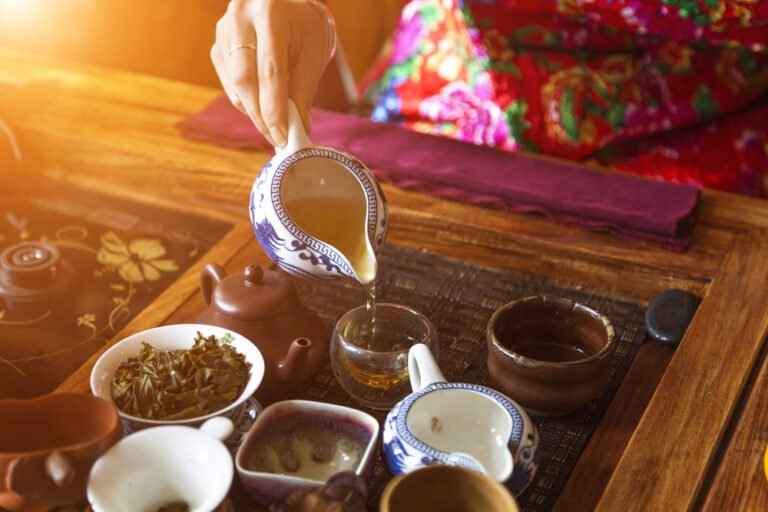
Gongfu Cha—literally “making tea with skill”—is a ceremonial art form deeply embedded in Chinese tea culture. It emphasizes multiple, short infusions using a high tea‑to‑water ratio. Typically prepared in a small Yixing clay teapot or a porcelain gaiwan, Gongfu Cha allows you to savor evolving flavors across successive steeps (Medium).
How to practice Gongfu Cha:
- Warm your vessel (teapot or gaiwan) and cups with hot water.
- Add a generous amount of tea leaves—around 5g in a 100 ml teapot.
- Rinse leaves briefly with hot water—1st infusion often discarded.
- Use near‑boiling water (95–100 °C) and steep for only 5‑30 seconds.
- Pour into small cups and savor; repeat multiple infusions, increasing steep time gradually (In Pursuit of Tea, artiteas.com, Simply Recipes).
This method is especially suited to complex teas like oolong and pu‑erh. Each steep reveals new aromas and taste layers, inviting mindfulness with every cup (unbottleyourtea.com).
Japanese Chanoyu and Sencha Rituals
In Japan, tea is synonymous not just with taste, but with a philosophy of harmony and mindfulness.
Chanoyu – The Matcha Ceremony
Chanoyu (also called Sado or Ocha) is a formal ritual centered around whisked matcha. Each movement—from cleaning utensils to serving—is performed with intention, reflecting wabi‑sabi: simplicity, purity, and calm (Medium, Wikipedia).
To prepare matcha:
- Sift matcha powder into a bowl.
- Add hot water (~75–80 °C).
- Whisk with a bamboo “chasen” until frothy and smooth.
- Sip carefully in three and a half sips, rotating the cup to honor the guest and host ritual (brewedbrilliance.com, Wikipedia).
Sencha Brewing
Sencha, Japan’s most popular loose-leaf tea, is brewed in a side-handled kyūsu teapot using cooler water (70–80 °C) and very short steeping times (30 seconds to 1 minute). These gentle methods preserve delicate vegetal, sweet notes without bitterness (brewedbrilliance.com).
Samovar: Russian Tea’s Symbol of Hospitality
The Russian samovar method is less about ceremony and more about community and warmth.
Zavarka Technique
In this centuries‑old tradition, a strong concentrate called zavarka is brewed in a small teapot using boiling water. The samovar heats water in a large urn; when serving, a small amount of concentrate is diluted with hot water to taste, often sweetened with sugar, honey, or served with lemon or jam (Wanderlustea, Wikipedia).
It’s a flexible method: each person adjusts the strength to their liking. The samovar itself becomes a gathering point, deeply embedded in Russian social life and hospitality rituals (Wanderlustea, Food & Wine).
Boiling and Decoction: Ancient Techniques
Historically, boiling tea leaves with water was common—especially in ancient China and herbal practices.
Boiling Method
Dating to the Tang Dynasty, this method involves simmering tea (or herbal roots, spices) in water for prolonged periods—sometimes hours. It’s ideal for hardy teas like pu‑erh, aged whites, and Hei cha. The result is robust, mellow, and sweet tea, rich with extracted flavors—but unsuitable for delicate green or black teas due to excessive bitterness risk (unbottleyourtea.com).
Decoction
Often used for herbal infusions (roots, bark, medicinal blends), decoction involves prolonged boiling to fully extract the therapeutic and flavor components. This method produces bold, concentrated brews appreciated in traditional herbal cultures around the world (artiteas.com).
Sun Brewing: A Gentle Extraction
Originating in ancient China and seeing revived interest today, sun brewing involves steeping tea leaves in cold water under sunlight for several hours. It’s suited to green, white, or lightly oxidized teas. The result is a smooth, naturally sweet brew—low in bitterness and rich in subtle aroma—for a tranquil experience under the sun (ShunCy).
Korean and Vietnamese Tea Ceremonies
Korean Darye and Jesa Ceremonies
Korean traditions like Darye focus on grace, moderation, and respect—with simple teaware and mindful preparation. Jesa ceremonies incorporate tea offering as part of ancestral rituals, served in small bowls to express reverence and connection across generations (artiteas.com).
Vietnamese Lotus and Oolong Tea Culture
In Vietnam, lotus tea is brewed by infusing green tea with lotus petals or scent—a fragrant ceremony representing elegance and hospitality. Vietnamese oolong ceremonies emphasize precise water temperature control and steeping time for layered flavor. Tea houses follow etiquette that balances community, taste, and mindfulness (artiteas.com).
Modern vs Traditional
Traditional brewing rituals prioritize sensory engagement—form, tempo, vessel, and intention—whereas modern brewing often emphasizes speed and convenience. Learning traditional methods enriches both technique and appreciation for what’s in your cup: aroma, flavor, texture, and context all intertwined (Medium, Tea Shots Club).
How to Get Started as a Beginner
Choose a method that aligns with your tea type:
- Oolong or pu‑erh: explore Gongfu Cha.
- Matcha or sencha: try Japanese Chanoyu or sencha brewing.
- Pu‑erh or aged whites: experiment with boiling or decoction.
- Community or ceremonial: use samovar or Korean/Vietnamese rituals.
Gather basic tools:
- Gaiwan or small Yixing clay teapot for Gongfu.
- Chasen, matcha bowl for Japanese tea.
- Kyūsu teapot for sencha or loose-leaf green tea.
- Samovar or double-pot setup for Zavarka.
- Glass or earthenware vessels for sun brewing or eastern rituals.
Practice technical precision:
- Temperature control: cooler water (70–80 °C) for delicate teas; near boiling for robust ones.
- Steep time: multiple short steeps for Gongfu; longer maims for decoction/boiling.
- Preheat vessels, rinse leaves, taste plain before adding anything.
Record your experiences:
- Note water temp, steep durations, leaf quantity, vessel, and your tasting impressions.
- Observe how flavors evolve with each infusion or method.
Final Thoughts
Traditional tea brewing methods unlock so much more than flavor—they reveal history, culture, ritual, and craft. Each technique encourages patience, presence, and appreciation. Whether you’re steeping matcha in Chanoyu style, pouring Gongfu Cha from a Yixing pot, or sharing zavarka around a samovar, the act itself becomes a meaningful experience.
Let aroma and ritual guide you. With attention and respect, brewing traditional tea can become a daily practice of artistry and mindfulness.